
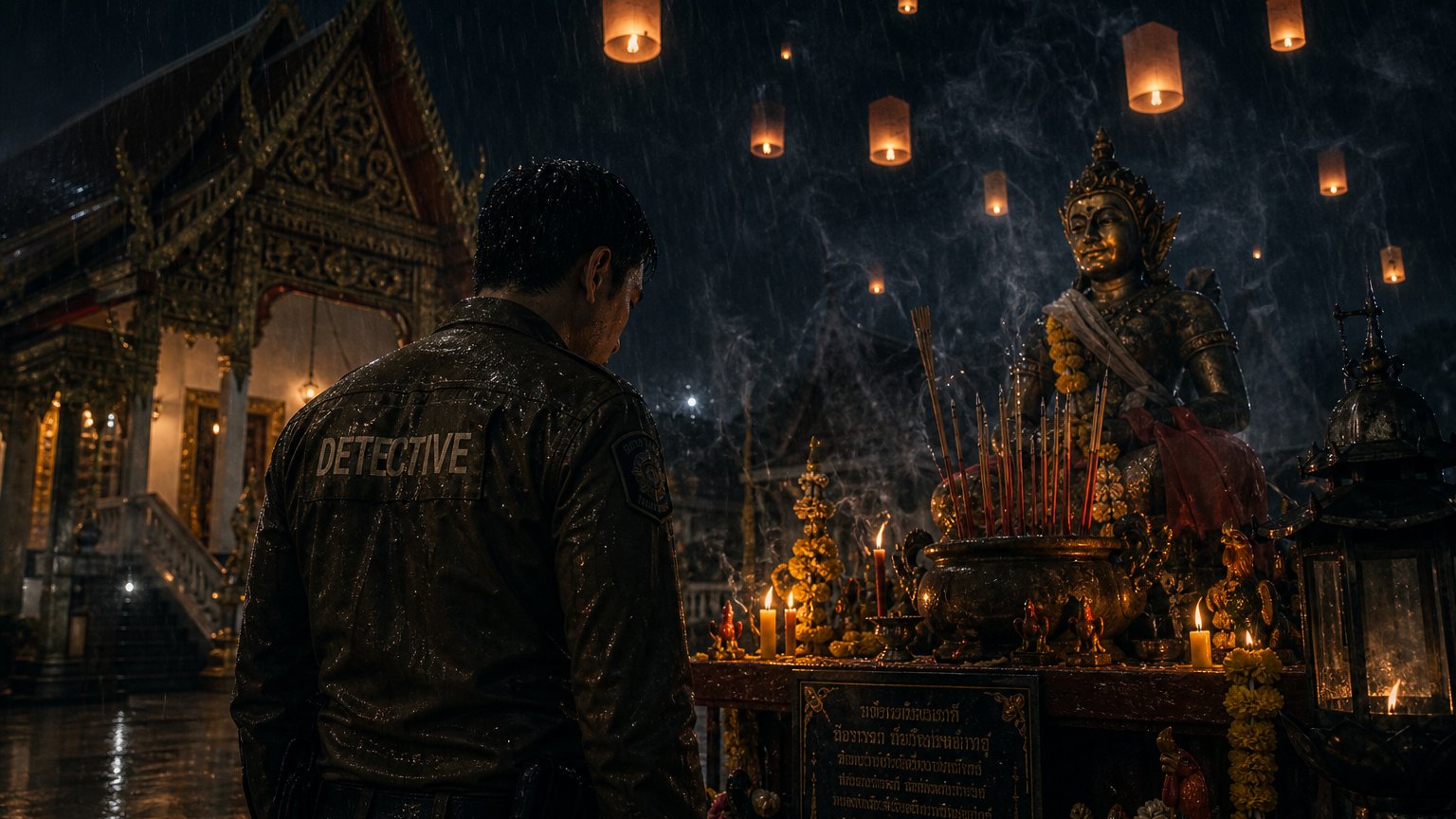
LOS ANGELES — In an era where streaming platforms are flooding the market with supernatural thrillers, Thai television offers a distinct counter-narrative with the premiere of Khom Khlang. The ten-episode series represents a deliberate move by Thai producers to merge the grounded, procedural rigor of police investigation with the metaphysical weight of traditional belief systems. It is a project that positions horror not as a subgenre, but as a cultural infrastructure.
Directed by Mi Puwadon Naosopa, the production leans heavily into the intersection of the rational and the irrational. The show follows the work of detectives who must navigate a case where the rules of evidence collide with the logic of dark sorcery. This is not merely a backdrop; the supernatural elements are woven into the investigative process itself, suggesting that in this universe, magic is a variable in the equation, not just a twist.
The Architecture of Belief
The creative choice to blend mystery and romance with Thai beliefs creates a narrative architecture that is distinctly Southeast Asian in flavor. The series stars Sireethorn Leearamwat and Puinoon Warangsiri Tanajarusworaphat, whose performances anchor the emotional and investigative threads. By centering the romance within the mystery, the show suggests that personal connection is often the lens through which the supernatural is perceived. The director’s approach treats the genre as a serious cinematic form, moving beyond the tropes of Western horror to explore how local mythology shapes the way truth is uncovered.
For the international horror community, Khom Khlang is a significant entry in the growing trend of non-Western horror that prioritizes cultural specificity. It is a reminder that the police procedural and the supernatural thriller are not mutually exclusive, and that the most effective horror often arises from the friction between institutional logic and ancestral belief. As the series unfolds, it promises a slow-burn experience where the stakes are defined not just by the case, but by the cultural weight of the beliefs that govern it.



Comments (3)