LOS ANGELES — There is a temptation to treat any given month's horror releases as a pile of unrelated openings, five films shoved onto a calendar by the blunt logic of distribution. July 2026 rewards a closer read. Taken together, these pictures form a single argument about where the genre draws its water — from the past, from the public domain, from the podcast feed, and, this month quite literally, from the sea.
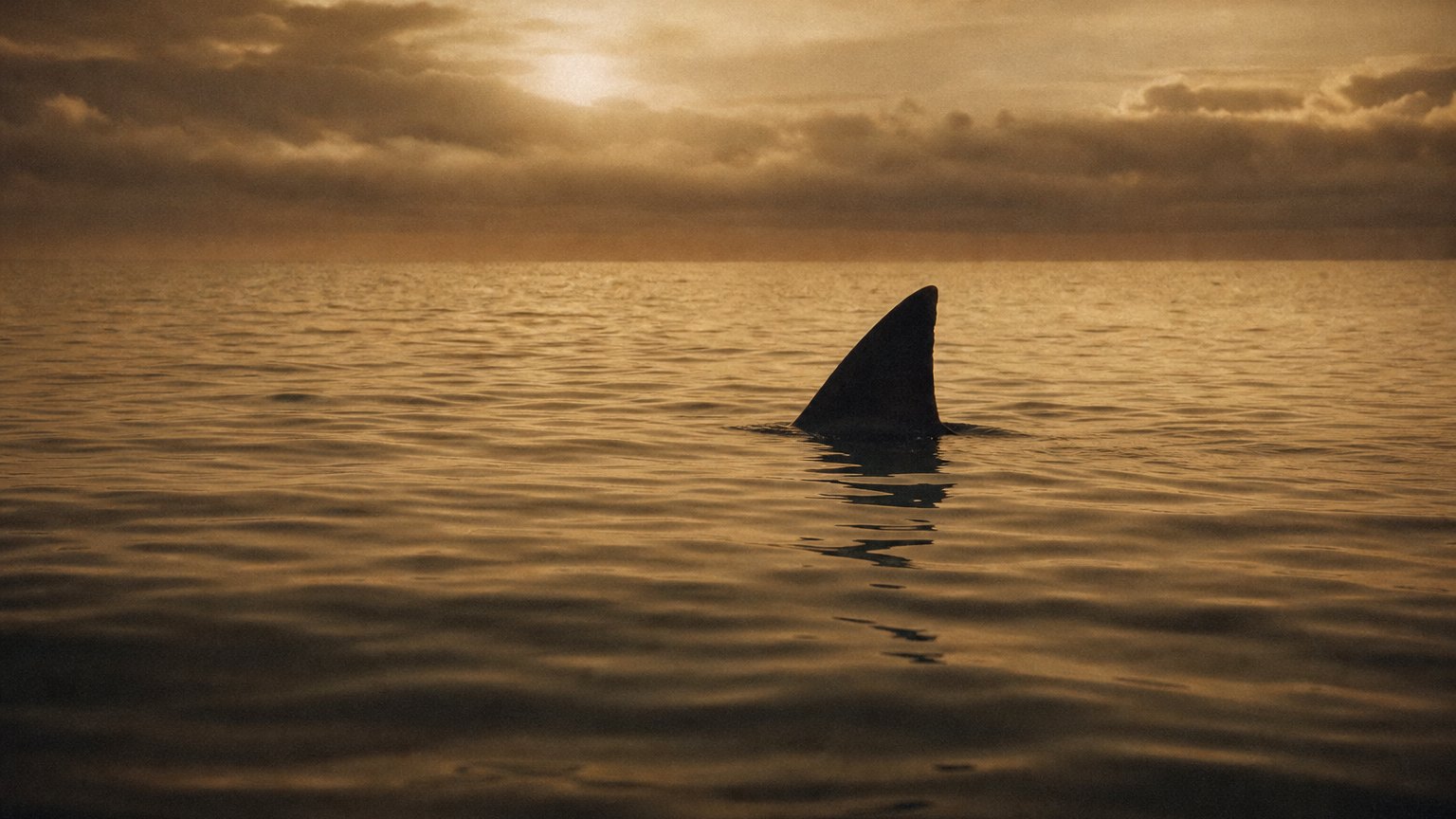
Begin with the shark. The summer creature feature is a tradition with a founding text, and every animatronic dorsal fin since has swum in the wake of what Steven Spielberg loosed on beach towns half a century ago. Phil Volken's The Bay, arriving July 17 in theaters and on demand, plants itself squarely in Shark Week season, its two friends stranded in a sanctuary after their tour boat goes down. That the film leans on a practical animatronic shark, engineered by the effects house Bischoff's, is not incidental nostalgia; it is a wager that rubber and hydraulics still frighten in ways pixels do not. The wager is the whole point.
If The Bay looks backward at a tradition, the month's auteur currents look inward at careers. Nicolas Winding Refn, the stylist behind The Neon Demon, returns to features for the first time in a decade with Her Private Hell (July 24), a giallo-inflected odyssey scored by Pino Donaggio — the composer of Carrie — and anchored by Sophie Thatcher. A mist swallows a future city; an elusive killing thing emerges; a young woman hunting her father crosses paths with an American soldier bound for a rescue of his own. It is Refn reaching back past his own filmography into the plush, saturated grammar of Italian horror's golden run.
The same graduation logic governs Evil Dead Burn (July 10). Sébastien Vaniček, who announced himself with the swarming dread of Infested, inherits Sam Raimi's cabin mythology and points it at a grieving widow taken in by her in-laws, who curdle one by one into Deadites. A promising outsider handed a franchise: the genre's oldest apprenticeship.
Then there is the machine that needs no permission. Pinocchio Unstrung (July 24), Rhys Frake-Waterfield's fifth entry in the public-domain Twisted Childhood Universe, sets its animatronic marionette loose in a London prep school with Richard Brake as a fevered Geppetto and Robert Englund voicing the Cricket. It is horror as intellectual-property arbitrage, ghoulish and shameless, and impossible to ignore — the same engine that produced the two Blood and Honey films now grinding through the nursery shelf.
Fittingly, the month opens July 3 with Lockbox, Daniel Stamm's adaptation of a story from Soren Narnia's Knifepoint Horror podcast, its screenplay by the playwright Justin Yoffe — Carla Gugino guarding a traumatized cousin from something otherworldly. A tale that lived first in listeners' ears now claims the screen. Inheritance, adaptation, resurrection: July's slate keeps circling the same idea, that horror rarely invents so much as it exhumes, and does its finest work deciding what to do with what it digs up.
Comments (5)