
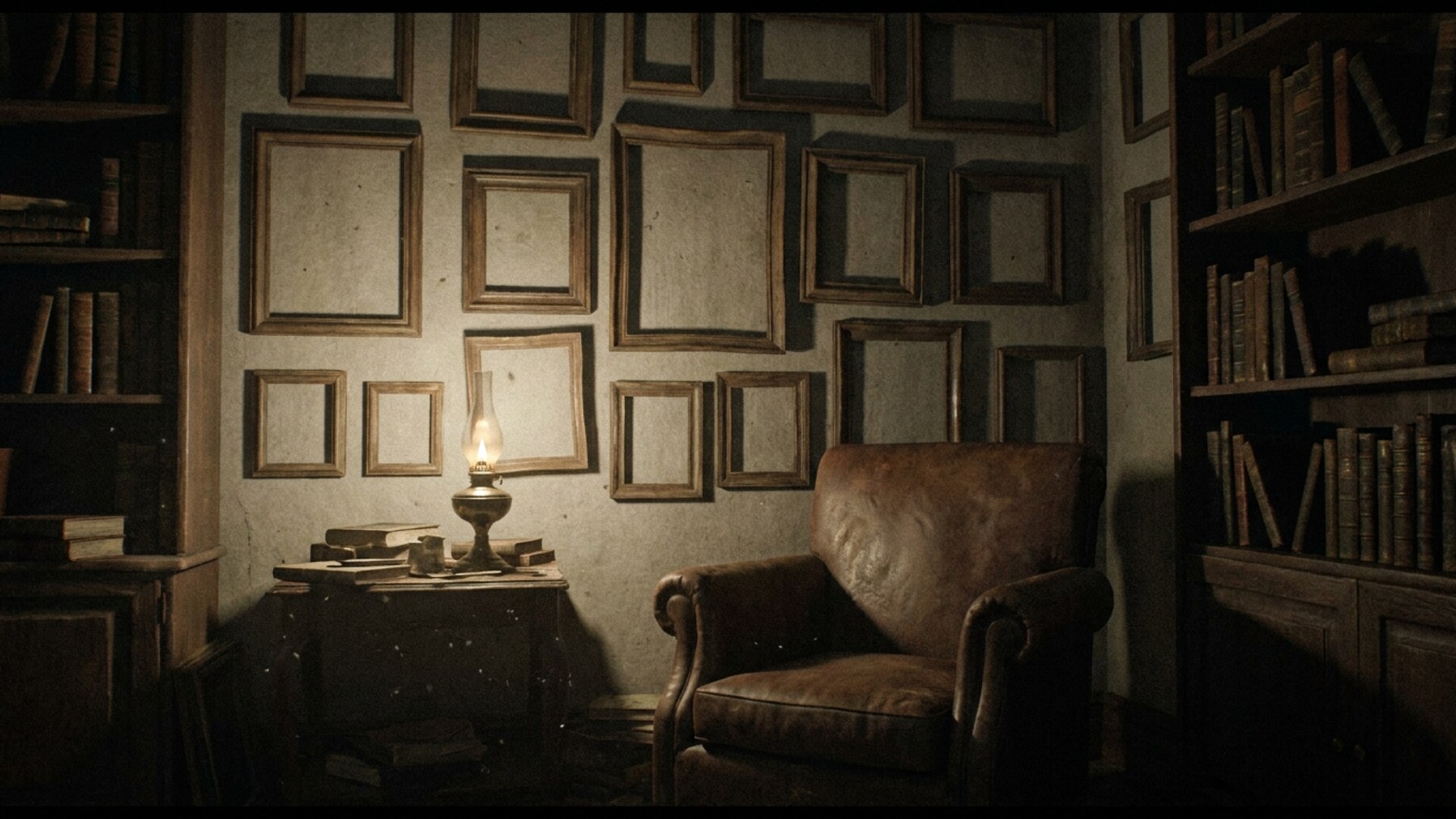
LOS ANGELES — The contemporary horror landscape has long been dominated by a binary choice: the visceral, adrenaline-fueled assault of the slasher or the atmospheric, slow-burn dread of the folk horror. Yet, as the industry looks toward the latter half of 2026, a different kind of tension is emerging from the shadows. On July 20, 2026, the announcement for Rehaunted signaled a shift in focus, moving away from external monsters toward the internal decay of the protagonist’s mind.
Described explicitly as a first-person psychological detective horror game, Rehaunted positions itself not merely as a test of reflexes, but as an exercise in cognitive dissonance. The title suggests a return, a revisiting of past traumas, but framed through the lens of investigation. This is not a story about being hunted; it is about hunting through the debris of one’s own history. The medium of video games offers a unique fidelity to this concept, allowing the player to inhabit the perspective of a detective whose sanity is as fragile as the clues they seek.
Available for PC, the project arrives at a moment when the indie sector is increasingly interested in narrative complexity over spectacle. The decision to ground the experience in the first-person perspective is a deliberate narrative tool. It forces the player to accept the unreliability of their own perception. In traditional cinema, the camera can offer an objective view, a safe distance from which to observe the horror. In Rehaunted, there is no such safety. The player is the detective, and by extension, the suspect. The environment becomes a mirror, reflecting distortions that may be physical or purely psychological.
The genre of psychological horror has often struggled with the translation of internal states to interactive media. Too frequently, the result is a disjointed experience where narrative weight is carried by cutscenes, leaving the gameplay feeling hollow. Rehaunted appears to attempt a synthesis, where the act of detection is intertwined with the erosion of the self. The player must piece together a reality that may be shifting beneath their feet. This approach aligns with a broader trend in independent horror, where the fear is derived from ambiguity and the inability to trust one’s senses, echoing the techniques of directors like David Lynch or the later works of Roman Polanski.
While the announcement provided few specifics regarding plot or mechanics, the framing of Rehaunted as a detective story is significant. It implies a structure built on clues, deductions, and revelations, but subverts these tropes by placing them within a horror context. The truth, in this case, is not just unknown; it is dangerous. The game invites players to question the nature of evidence and memory, suggesting that the past is not a fixed point, but a fluid, haunting presence.
As development continues, the horror community will be watching closely. Rehaunted represents a bold step into uncharted territory, challenging the conventions of both the detective genre and the horror genre. It promises an experience that lingers, not in the adrenaline of the chase, but in the quiet, unsettling realization that the mind is the most terrifying landscape of all.

Comments (8)