NASHVILLE — Principal photography has wrapped on "Ravenmocker," the 20-episode vertical horror series from Screamify, closing a production that asked a period drama to move at the speed and budget of a phone feed.
The series, a Micro Horror™ format built around roughly two-minute episodes that each end on a cliffhanger, follows a carload of teenagers stranded on a rural Tennessee backroad in 1971 who cross into the hunting ground of the Ravenmocker, the heart-stealing witch of Cherokee folklore, bound to the land by a Civil War love story that ended in blood. The story moves between the 1860s and 1971, doubling the demands of a shoot already compressed for a vertical frame and a fraction of a conventional budget.
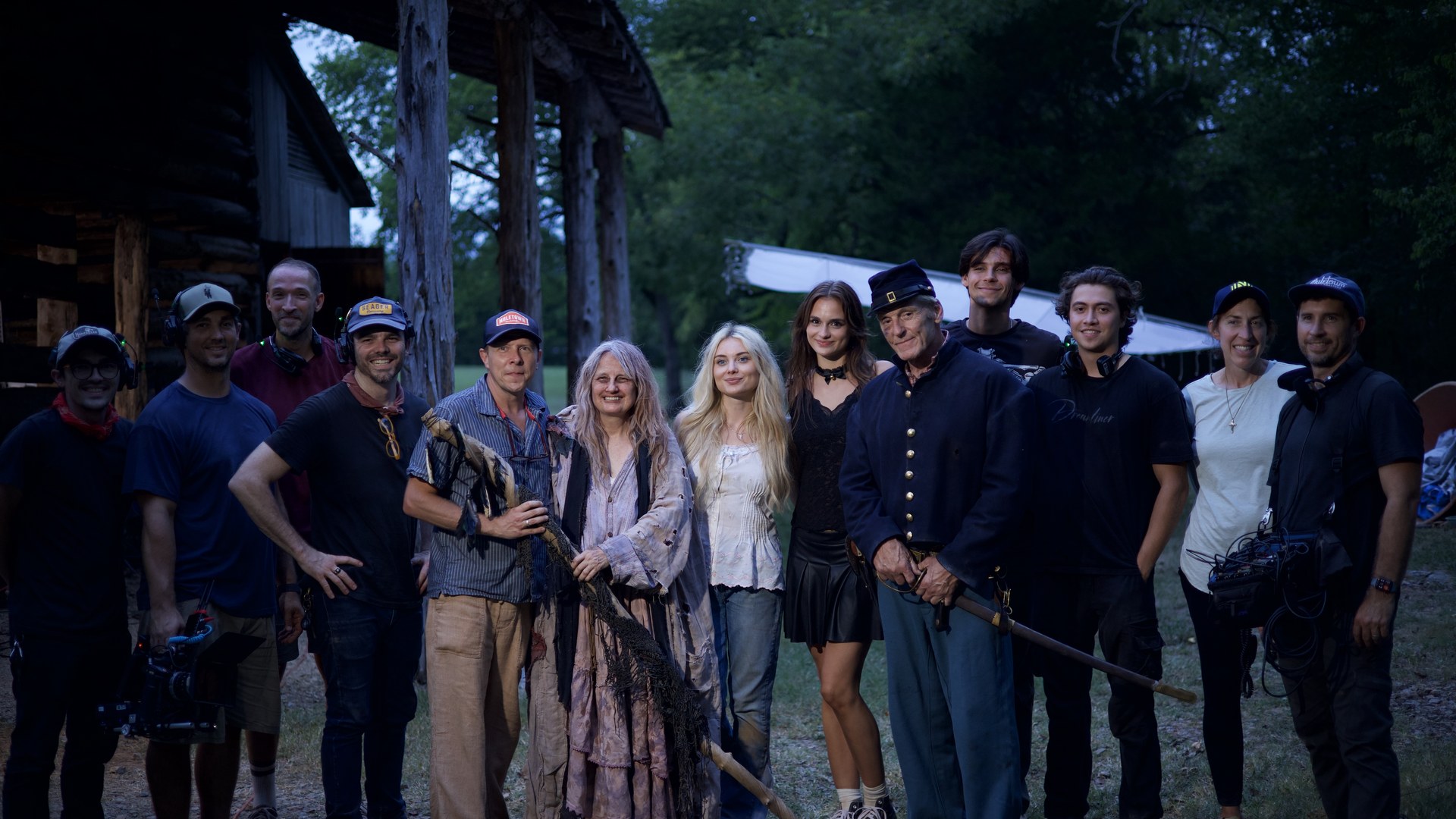
Written by John White and directed by Gabe McCauley, "Ravenmocker" was produced by Soul Feather Studios, the two-time National Daytime Emmy-winning Nashville company behind PBS's "Reconnecting Roots," with Joel McAfee producing. Laryssa Goodlad executive produced for Screamify and Oh Gosh Yeah Entertainment, LLC; the series was developed by Screamify Originals. Post-production is now underway, with no release date announced.
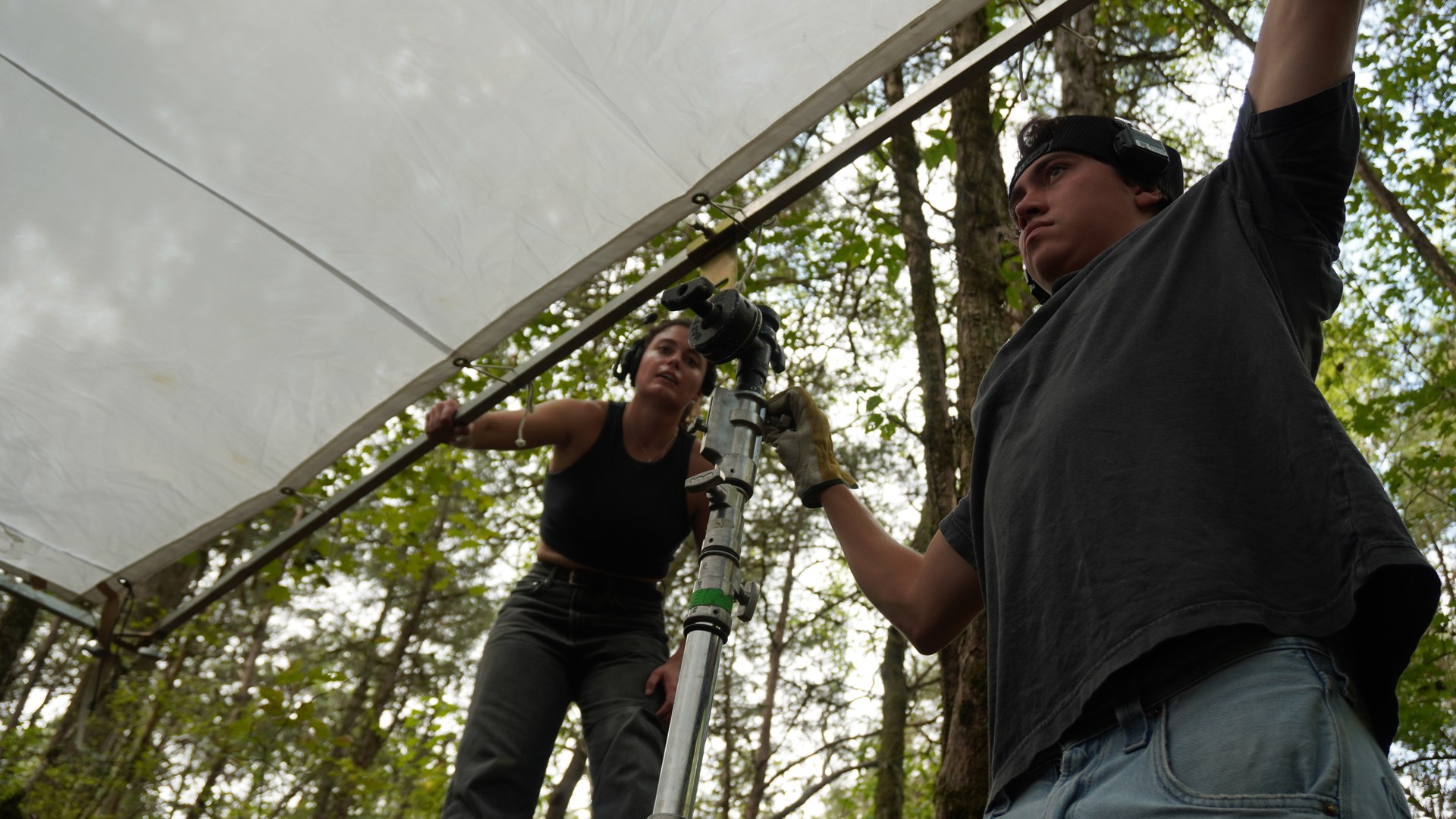
The strain of that scale showed up first in the crew's own accounts of the shoot. "We're shooting in a barn that has no power," said grip Joseph Machosky. "That challenge falls on the grips — find a power source, figure out how to light the scene." It is a small sentence that describes a familiar problem in low-budget filmmaking dressed up as a period piece: a nineteenth-century setting has no wiring to hide, and none to borrow.
Director of photography Chris Haggerty described a second, more structural problem — the vertical frame itself. "The problem with vertical is over-the-shoulders," Haggerty said. "You have to stack people that close together." It is a technical complaint that doubles as an aesthetic one: two actors occupying a nine-by-sixteen rectangle read differently than they do in a widescreen frame built for two shoulders and a horizon line.
Haggerty put the larger pressure on the production in plainer terms. "The ask of crews is to still bring quality, but in half the time and half the budget," he said. "That's the reality the industry is in right now." It is not a complaint unique to this set, but it is rare to hear it stated so plainly, on the record, while cameras are still rolling nearby.
The period costuming added its own discomfort. "Those Civil War outfits are three pounds of wool," said director Gabe McCauley. "And it's going to be 95 today. So I'm looking forward to it." Special-effects makeup artist and actor Jazlyn Adams described building a piece of practical gore for the production by hand: "I sculpted it, molded it, cast it in silicone. The end goal is to core it out so it'll beat. And bleed."
The shoot ended, fittingly, with a performance. Actor Darby Cappillino, who plays Grace and the younger version of Antoinette, sang "Lorena," a Civil War-era song published in 1857, on camera on the final day. "It's the last day of filming, so I'm already emotional," Cappillino said. "It might take all night. But it's like we're having a big old sleepover."
Comments (0)
No comments yet. Be the first.