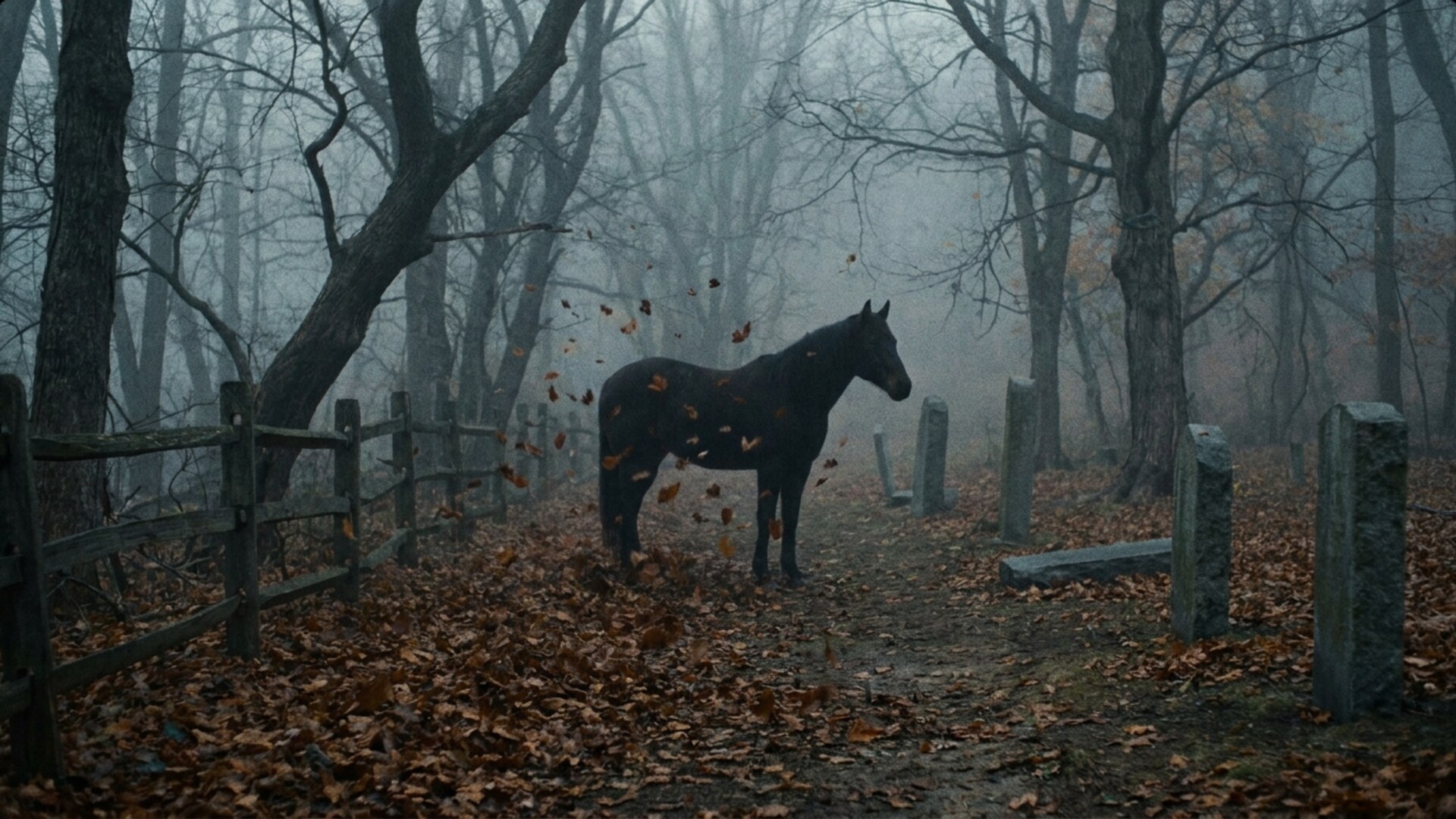
LOS ANGELES — The legend of Sleepy Hollow has proven remarkably resilient, surviving the turn of the century and the advent of streaming television to remain a fertile ground for cinematic horror. Sony Pictures has moved to secure the feature film rights to a new adaptation titled 'Hollow,' a project that promises to dissect the genre’s most enduring iconography through a distinctly modern, feminist lens. The acquisition marks a significant shift in how legacy horror properties are being handled by major studios, moving away from spectacle toward character-driven psychological tension.
A Shift in Perspective
At the center of this new iteration is Lindsey Anderson Beer, who has developed the project based on her forthcoming novel. Beer is set to write the screenplay and make her feature directorial debut, a dual role that suggests a tightly controlled authorial vision. The narrative framework abandons the traditional focus on Ichabod Crane, the superstitious schoolteacher, in favor of Katrina Van Tassel. By positioning Katrina as the protagonist, the story transforms from a ghost story into a supernatural mystery and erotic thriller, effectively dismantling the trope of the woman as a passive prize to be won or feared.
This reimagining aligns with a broader industry trend where classic folklore is subjected to rigorous gender analysis. The Headless Horseman, once the apex predator of the narrative, is relegated to a shadowy force within a larger, more complex psychological landscape. Sydney Sweeney is attached to star as Katrina Van Tassel and serve as a producer through her company, LuckyChap Entertainment. Sweeney’s involvement brings a specific contemporary weight to the role, leveraging her growing influence to ensure the character retains agency and depth. Her participation signals that the project is not merely a nostalgic reboot but a substantive re-evaluation of the source material’s power dynamics.
Contextual Resonance
The announcement follows a history of adaptations that have struggled to capture the essence of Washington Irving’s original 1820 tale. Tim Burton’s 1999 film remains a cultural touchstone, noted for its visual grandeur but often criticized for its narrative excess. Similarly, the four-season television series that concluded in 2017 explored the lore through a serialized mystery format, expanding the universe beyond its initial scope. 'Hollow' appears to be carving a distinct path, relying on the literary foundation of Beer’s upcoming novel, which is scheduled for publication by Putnam in the fall of 2027. The delay between acquisition and release suggests a deliberate pace, allowing for the development of a script that balances atmospheric horror with thematic rigor.
For Horror Dispatch, this development offers a compelling case study in the evolution of horror cinema. The move to center a female protagonist in a story historically defined by male anxiety reflects a changing audience appetite for stories that interrogate rather than simply indulge in fear. As production timelines are set, the industry will be watching to see if Sony can replicate the critical success of previous indie-horror crossovers while maintaining the integrity of Beer’s voice. The project stands as a testament to the enduring power of Sleepy Hollow, proving that even the most exhausted myths can find new life when viewed through a fresh, critical eye.
Comments (8)